
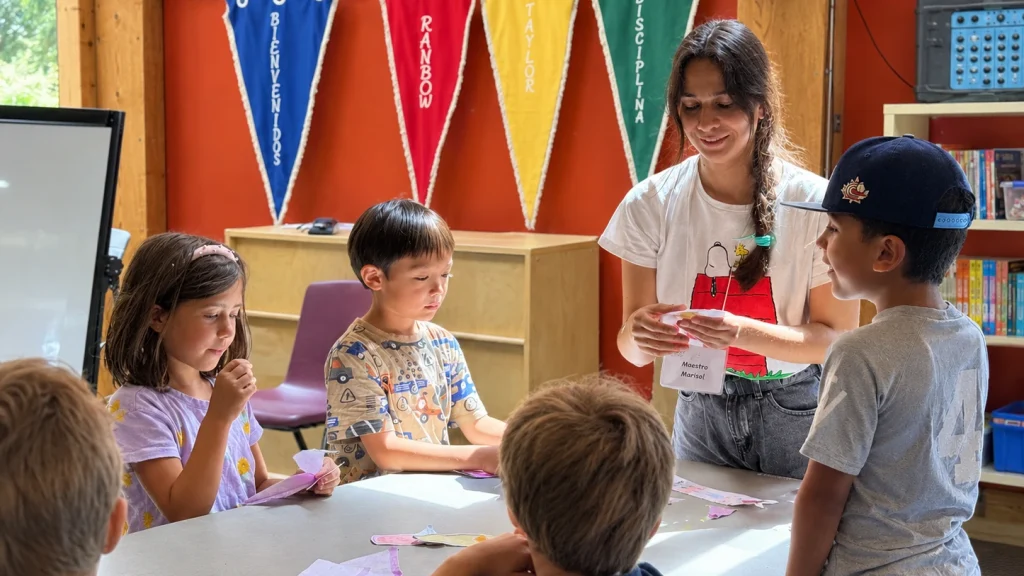
Learning a new language can be a rewarding experience at any age, but childhood offers a particularly natural opportunity to explore a second language. For children, language learning can become part of everyday life through songs, games, stories, conversations, and meaningful interactions.
Spanish is spoken by hundreds of millions of people around the world, making it a valuable language for children to discover. Whether your family already speaks Spanish or your child is starting from scratch, early exposure can help make Spanish a familiar and enjoyable part of their lives.
So, what are the benefits of learning Spanish at a young age? Here are some of the reasons parents may want to introduce Spanish during childhood.
1. Children Can Become Comfortable Hearing Spanish
One of the most valuable parts of early language exposure is simply becoming familiar with how a language sounds.
Children who regularly hear Spanish can become accustomed to its pronunciation, rhythm, vocabulary, and common expressions. Songs, stories, conversations, and classroom activities all provide opportunities to hear Spanish in meaningful contexts.
The goal does not have to be immediate fluency. At first, simply hearing and recognizing Spanish can help children become more comfortable with the language.
2. Learning Spanish Can Build Confidence
Learning a new language takes practice, and children may initially feel unsure about speaking.
A supportive environment can help them gradually become more comfortable using Spanish. Simple successes—understanding a word, answering a question, singing along to a song, or introducing themselves—can encourage children to keep participating.
Over time, these small moments can help children develop confidence in communicating in another language.
3. Spanish Can Be Learned Through Play
Children naturally learn through play and exploration. Spanish can become part of that process.
Instead of relying only on traditional studying, children can encounter Spanish through:
- Songs and rhymes
- Games
- Picture books
- Arts and crafts
- Movement activities
- Role-playing
- Simple conversations
- Stories and videos
This approach can make Spanish feel less like a school subject and more like something children actively use and enjoy.
4. Learning a Language Can Encourage Communication Skills
Learning another language gives children additional opportunities to think about how people communicate.
They encounter new vocabulary, sentence structures, sounds, and ways of expressing ideas. They may also learn that the same object or idea can have different names depending on the language being used.
These experiences can encourage curiosity about language and communication.
5. Spanish Can Help Children Connect With Culture
Language and culture are closely connected.
Through Spanish, children can discover traditions, celebrations, music, food, stories, and communities from different Spanish-speaking countries.
This can help children understand that Spanish is not just a collection of vocabulary words. It is a living language spoken by diverse communities around the world.
For families with Spanish-speaking relatives or cultural connections, learning Spanish can also provide a meaningful way for children to strengthen those connections.
6. Early Exposure Gives Children More Time to Practice
Learning a language is a gradual process. Children do not need to become fluent quickly for early exposure to be valuable.
Starting young simply gives children more time to hear, practice, and use Spanish as they grow.
A child might begin with individual words and expressions, then gradually move toward short sentences and conversations. Consistent exposure can make the process feel more natural over time.
7. Spanish Can Become Part of Everyday Life
One of the best ways to support language learning is to make Spanish part of everyday routines.
Parents can introduce simple Spanish words and expressions during activities children already enjoy:
- Buenos días — Good morning
- Vamos — Let’s go
- Gracias — Thank you
- Por favor — Please
- ¿Qué color es? — What color is it?
- ¿Dónde está…? — Where is…?
These small moments can add up and help children see Spanish as a language they can actually use.
How Parents Can Encourage Spanish Learning
Parents do not need to speak perfect Spanish to support their child’s learning.
You can start with small, manageable activities at home. Read a Spanish picture book together, listen to Spanish music, label a few objects around the house, or practice simple phrases during daily routines.
The most important thing is to create positive experiences and avoid putting unnecessary pressure on children.
For more practical ideas, see our guide to How to Help Your Child Learn Spanish at Home.
Spanish Classes Can Give Children a Regular Place to Practice
Home activities are a great way to introduce Spanish into everyday life, but structured classes can give children additional opportunities to listen, speak, interact, and practice with others.
At PSLA Spanish Classes for Kids, children can learn Spanish through age-appropriate activities in a supportive learning environment.
For parents in Vancouver looking for Spanish classes, you can also read our guide: Spanish Classes for Kids in Vancouver: A Guide for Parents.
Frequently Asked Questions
What is the best age for a child to start learning Spanish?
There is no single “best” age. Children can begin learning Spanish at different ages, and early exposure can make the language a familiar part of their environment.
Does my child need to speak Spanish at home?
No. Even families who do not speak Spanish can introduce the language through books, songs, games, classes, and simple everyday expressions.
How long does it take for a child to learn Spanish?
It depends on factors such as age, exposure, practice, and opportunities to use the language. Regular, enjoyable exposure is generally more useful than occasional intensive practice.
Can children learn Spanish and another language at the same time?
Yes. Children can be exposed to multiple languages. The experience will vary from child to child, and consistent opportunities to hear and use each language are helpful.
Final Thoughts
Learning Spanish at a young age can give children an enjoyable opportunity to explore another language and culture. From songs and stories to everyday conversations and structured classes, there are many ways to make Spanish a positive part of childhood.
The goal does not have to be perfection. Creating regular opportunities to hear, understand, and use Spanish can help children gradually build familiarity and confidence.
Ready to introduce Spanish to your child? Explore PSLA Spanish Classes for Kids and discover a fun way to keep learning.